From Mountain Karst to Easy Digestion: The Therapeutic Power of Blue Juniper Berries
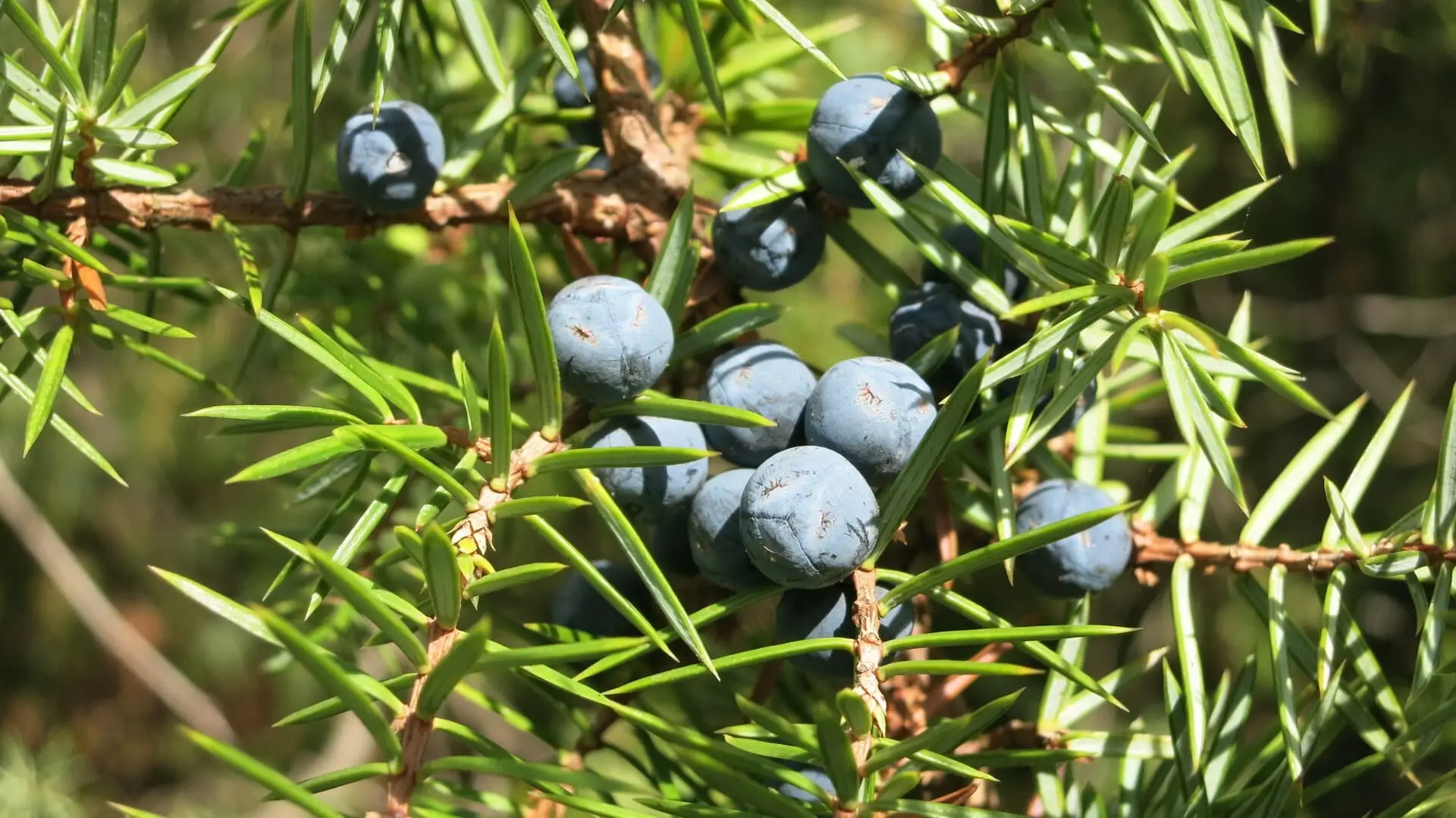
Juniper (Juniperus communis) has held a central place in traditional European phytotherapy for centuries. Its distinctive blue berries (pseudo-fruits) are a rich source of bioactive compounds, primarily flavonoids, terpenes and essential oils, which exhibit strong antioxidant, anti-inflammatory and, above all, carminative properties.
Juniper’s medicinal value stems from its complex chemical profile. Key active constituents include:
- Monoterpenes: alpha-pinene, myrcene and sabinene – associated with antiseptic activity.
- Flavonoids: rutin, quercetin and apigenin – potent antioxidants.
- Tannins and bitter substances: important for stimulating digestive secretions.
Benefits for the digestive system
1. Carminative action
Juniper’s effects are not one-dimensional. They involve smooth-muscle modulation, enzymatic activation and an antioxidant response at the cellular level. Juniper extract is known for its ability to relax the smooth muscle of the gastrointestinal tract. It helps eliminate accumulated intestinal gas, thereby reducing the sensation of bloating and abdominal heaviness.
The main mechanism by which juniper reduces bloating and cramps is based on calcium-channel blockade in intestinal smooth muscle. Terpenoids inhibit the influx of calcium ions into smooth-muscle cells. A lack of free cytosolic calcium prevents contraction of muscle fibres, leading to relaxation (spasmolysis). This directly facilitates gas passage and lowers abdominal pressure.
2. Stimulation of digestive enzymes
Bitter substances present in juniper stimulate the secretion of gastric juice and bile. This process supports the breakdown of macronutrients (especially fats and proteins), enabling faster and more efficient nutrient absorption without overburdening the stomach.
Juniper’s bitter compounds activate bitter receptors located on the tongue as well as in the gastric mucosa itself. This activation via the nervus vagus initiates the cephalic phase of digestion and stimulates gastrin release.
Did you know? The cephalic phase of gastric secretion begins even before food reaches the stomach. It is triggered by seeing, smelling and tasting food—and even by thinking about food. Neural signals that initiate the cephalic phase originate in the cerebral cortex and appetite centres in the amygdala or hypothalamus, and are transmitted to the stomach via the nervus vagus. The result is increased secretion of hydrochloric acid and pepsin. Adequate gastric acidity is crucial for protein denaturation, helping prevent proteins from reaching the colon undigested (where they could ferment and produce gas).
3. Antimicrobial effects on the gut microbiota
Research has shown that compounds such as terpinen-4-ol demonstrate selective antimicrobial activity. They may help suppress pathogenic microorganisms in the gut without disrupting the balance of beneficial bacteria, supporting long-term microbiome health.
4. Diuretic and “detox” effects
Juniper supports kidney function and promotes the excretion of excess fluid from the body.
Other benefits
Beyond digestion, juniper extract may contribute to overall well-being through:
- Antioxidant protection: neutralising free radicals generated by stress or intense physical activity.
- Anti-inflammatory activity: inhibiting inflammatory mediators, which can be helpful for tissue recovery after exertion.
- Support for glucose metabolism: preliminary research suggests a mild hypoglycaemic effect, which may help stabilise blood sugar levels after meals.
Juniper’s ability to reduce gastrointestinal discomfort makes it a valuable ally for anyone with a sensitive digestive system.
Precautions and contraindications
Although juniper can be highly beneficial, its potency calls for caution in specific groups, but only when juniper essential oil is used.
- People with kidney disease
Long-term use or very high doses of pure juniper essential oil may irritate the renal parenchyma due to certain monoterpenes. - Pregnancy and breastfeeding
Juniper has traditionally been considered an emmenagogue (a substance that promotes menstruation) and may cause mild uterine contractions. - Interactions with diabetes medication
Because juniper may have a natural hypoglycaemic effect (lowering blood sugar), it can act synergistically with diabetes medicines (such as metformin or insulin).
Juniper facts
- Juniper grows extremely slowly, yet it can live for more than 2,000 years—meaning some shrubs you see today may date back to antiquity!
- On the same juniper shrub you can often see green (young) and dark-blue (ripe) berries at the same time, because the berries can take up to two years to fully mature.
- In the past, people burned juniper twigs indoors to “purify” the air from disease. Today we know its essential oils do have strong antibacterial properties.
- Juniper is used in gin production—alcohol infused with botanicals. For a spirit to be legally called gin, the dominant aroma and flavour must come from juniper berries.
Sources:
- Bais, S., et al. (2014). A Phytopharmacological Review on a Medicinal Plant: Juniperus communis. International Scholarly Research Notices.
- Carpenter, R. D., et al. (2012). Antioxidant and Antimicrobial Activities of Juniper Berry Extracts. Journal of Food Science.
- European Medicines Agency (EMA). (2010). Assessment Report on Juniperus communis L., pseudo-fructus.
- Pepeljnjak, S., et al. (2005). Antimicrobial activity of juniper berry essential oil (Juniperus communis L.) on Food-Borne Pathogens. Acta Pharmaceutica.
- Höferl, M., et al. (2014). Chemical Composition and Antioxidant Properties of Juniper Berry (Juniperus communis L.) Essential Oil. Natural Product Communications.
- Tariq, S. A. (2016). Role of Juniperus communis L. Abietane Diterpenes in Membrane Stabilization. Phytochemistry Reviews.
- Johnson, W., et al. (2010). Final report on the safety assessment of Juniperus communis. International Journal of Toxicology.
- Saeed, M., et al. (2018). Bitter receptors (T2Rs) in the gastrointestinal tract: role in effector systems. Frontiers in Physiology.